Picture unpacking a velvet pouch containing a Tiger's Eye bracelet you've worn daily—only to find three beads fractured overnight. Your first thought might leap toward folklore interpretations. But pause and notice those uneven crack edges catching the light differently now. Moments like these prompt our practical checklist approach: Instead of drowning in vague online theories, you'll get actionable insights grounded in mineral science and jeweler-tested observations. This guide organizes what matters into clear decision-points, transforming confusion into confidence when examining broken stones.
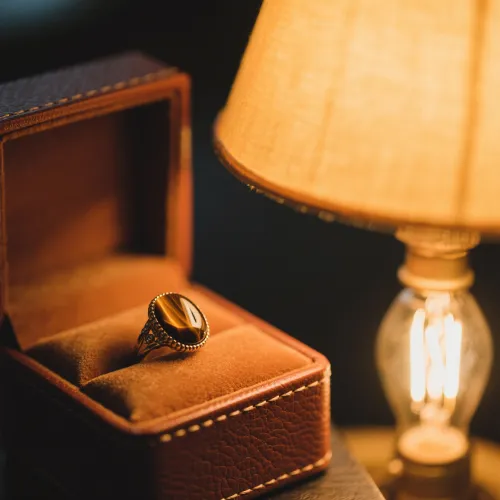
A friend once brought me a Tiger's Eye ring with a clean vertical split. "Does this mean it absorbed too much negativity?" she asked. As we examined it under a lamp, I pointed out tiny, thread-like flaws running parallel to the break—pre-existing structural weak points invisible when intact. These form during the stone's natural crystallization. Such situations benefit from knowing mineral properties first. Why? Misinterpreting breaks wastes energy on imagined causes while overlooking preventable risks to other stones.
Breaks often stem from Tiger's Eye ranking 6.5-7 on the Mohs hardness scale—resistant to scratches but vulnerable to hard knocks. Thermal shock is another key culprit; moving quickly between extreme temperatures can fatigue the stone. But the broken edge appearance holds clear physical clues:
Imagine noticing hairline cracks on a pendant’s surface before it fully fractures. These fine grey lines, visible when tilted against light, reveal subsurface tensions natural to the stone. Contrast this with red flags: Dye treatments often pool at fracture points like watercolor stains, while synthetic stones show unnaturally uniform patterns when damaged.
Picture someone who sleeps with a Tiger's Eye worry stone under their pillow. One morning, they discover it fractured neatly in two—no drops, no pressure. In metaphysical contexts, believers might see stone breakage as energy shifts. We won’t validate spiritual claims here, but it’s helpful to recognize common narratives:
Popular symbolic interpretations suggest fractures represent absorbed negative energies or completed protective work. Yet geological factors can easily replicate such "mysterious" breaks—especially through internal structural stresses suddenly releasing. If symbolic meaning matters to your experience, consider this nuance: The break context—where, when, how—holds more personal insight than universal rules.
I’ve watched workshops where dealers test thermal sensitivity by touching stones briefly to heated glass. Authentic Tiger's Eye tends to form micro-stress lines under abrupt temperature change—which could explain "spontaneous" fractures during hot/cold weather shifts. Meanwhile, fracture myths abound:
Three months after buying an online-sold Tiger’s Eye sphere, its stand collapsed. The sphere rolled off and shattered on ceramic floor tiles revealing unnaturally uniform interior structure—a lab-grown imitation. Authenticity checks become critical post-break. Why? Repair decisions should depend on whether you have a valuable stone or inexpensive replica. Broken fragments offer hidden verification points unseeable pre-damage.
Analyze break points with a jeweler’s loupe or smartphone zoom:
Try tapping unbroken pieces with metal. Genuine quartz emits a clear "ping" while glass fakes produce duller sounds. Also compare weight—Tiger’s Eye’s specific gravity (2.58-2.64) helps distinguish it from common glass imitations.
A broken gold-toned section might show oxidized iron streaks, while blue-grey fractures in Hawk’s Eye indicate unoxidized crocidolite fibers—both authentic variations. But unnatural color pooling at break edges?
When a client dropped her red Tiger’s Eye bracelet, white streaks emerged where beads cracked—exposing underlying dye treatments. She avoided further purchases from that vendor.
A necklace clasp survives intact while stones fracture? This signals concentrated stress on delicate points. Prevention combines environmental awareness and jewelry-design adjustments:
Note timing if breaks recur during seasonal shifts. Humidity changes can expand fracture risks in lower-grade stones. Also observe:
When choosing designs, prioritize bezel settings that encase stone edges versus prong settings that expose them to knocks. For tumblestones in pockets, store them individually in soft pouches to prevent abrasive collisions with keys or coins. Also consider:
That Tiger's Eye coaster fractured diagonally? Don’t discard it yet. After assessing the break location, several actions may apply:
Glue works only if:
Discard pieces showing "fibrous pulverization" where interior fibers crumble into powder—it means permanent structural death. But don’t overlook creative repurposing. That cracked palm stone? Re-shape it into smaller worry stones if the chatoyant band remains intact.
Hairline cracks can multiply invisibly. Test stone stability by monitoring:
A cracked ring stone requires different caution than a display mineral. For wearable pieces, reassess mounting security and avoid pressure situations—like removing tight gloves—that could worsen damage.
After the stories and evidence, simplify your approach for future moments: First, examine the fractured edge with bright light—is it sharp or curved? Does it cut across the shimmering band? Then consider timing—was this winter heating season or after swimming? Finally, match physical evidence (thermal cracks? pressure points?) against symbolic narratives if applicable to your context.
Let this transform how you move forward: Next time you shop for Tiger’s Eye jewelry, you’ll inspect settings for edge protection first. When unpacking stones, you’ll watch for hairline shadows warning of subsurface tensions. This awareness helps you appreciate Tiger’s Eye for its geological wonders—not just its golden glow.
Q: Do broken pieces lose protective properties?
A: Energy efficacy interpretations vary per belief system. Material-wise, fractures may reduce light-reflecting chatoyancy by interrupting fiber alignment.
Q: Should I stop wearing a ring with hairline cracks?
A: Small surface fractures may remain stable but monitor them. Remove during high-impact activities to prevent propagation.
Q: Why might beads break while clasps stay intact?
A: This often relates to localized stress concentration where drill holes weaken bead structures.
Q: Can I repair cracks at home?
A: Professional adhesives work best. Self-repairs risk misalignment or chemical damage to oxidized surfaces.
Accredited mineral identification handbooks
Gemological fracture pattern databases
Geological survey publications on quartz durability
Materials science journals on crystalline defects


$
