Picture walking through a bustling weekend market, your eye catching a stall draped with shimmering golden-brown pendants. The seller claims they’re genuine tiger’s eye, but doubt flickers – how can you know? That moment of hesitation is why we’ve distilled decades of mineral sourcing experience into this actionable guide. Instead of overwhelming jargon, you’ll get street-smart verification techniques wrapped in everyday scenarios. Whether examining an online listing or negotiating at a gem fair, these focused checks transform uncertainty into confident decisions. Consider this your personal toolkit for navigating the tiger’s eye marketplace.
A friend once wondered why their "tiger’s eye" lacked signature light streaks – until learning genuine specimens form through crocidolite fiber replacement over millennia. This geological fingerprint matters because synthetic glass mimics colors but misses nature’s structural complexity that creates chatoyancy. Understanding this transforms how you evaluate sellers’ claims.
Authentic pieces begin as blue asbestos fibers slowly crystallizing under silica-rich groundwater. Visualize desert wind revealing layered rock formations bit by bit. Over centuries, iron oxidization turns specimens golden while preserving fibrous patterns like fossilized waves. This natural timeline explains why lab-grown versions feel "off" – they lack time’s textural nuances.
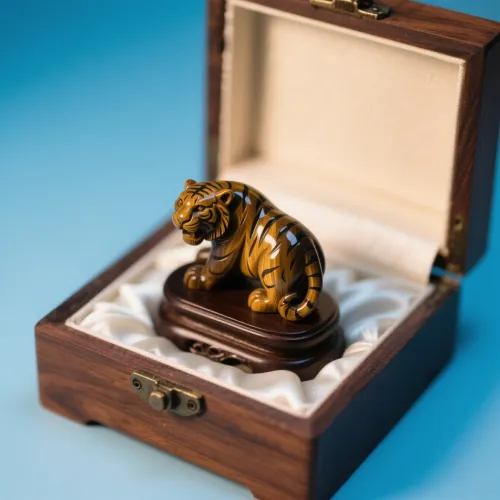
During a gem show negotiation, watch how experienced buyers tilt pendants under pendant lights. They’re observing light’s behavior – authentic tiger’s eye exhibits shifting "cat’s-eye" streaks. Mastering these tactile checks matters most during impulse purchases when documentation feels lacking.
Hold pieces beneath directional light like window sunshine. Slowly rotate – real stones reveal a luminous band dancing perpendicular to the grain. Now test thermal response: press against your temple for five seconds. Upon removal, genuine quartz feels cool as desert nights while plastic impersonations retain warmth.
Picture polishing dust scattering under a jeweler’s wheel. Authentic stones maintain silk reflectance under 60-degree lighting, unlike waxy resin finishes. Heft comparison works surprisingly well: carry reference objects like rough quartz chunks when shopping. Genuine pieces feel reassuringly heavy; fakes mimic size but not density.
Common marketplace missteps include fixating only on color depth. A collector once overlooked unnaturally red bracelets later revealing surface dye at their carved edges. Cross-verify with these heft and texture protocols before transactions.
Online galleries allow zooming into fibrous details while boutiques enable hands-on verification. Each venue requires adapted strategies. Remember Sarah’s story: she purchased verified "vintage estate pieces" that later exhibited plastic characteristics – highlighting why newness guarantees nothing.

Boutiques associated with gemological associations offer documentation chains but at premium prices. Request their reference photos showcasing banding patterns before visiting. Alternatively, reputable market vendors provide better negotiation leverage – always verify return policies permitting gemologist authentication periods post-purchase.
Zoom deep into sellers’ macro-photography, especially on cut edges showing interior patterns. Legitimate listings reference deposit sources – search South African/Namibian origins. One buyer avoided disappointment by requesting smartphone videos tilted under lamps, revealing absent chatoyancy in fakes.
A traveler’s crocodile-wallet charm retained its glow after decades due to proper care – unlike discolored counterfeits. Authenticity preservation starts before purchase through ethical sourcing documentation ensuring material integrity remains uncompromised.
With Mohs hardness at 6.5–7.0, tiger’s eye withstands daily wear better than softer crystals but should avoid abrasive surfaces like sandy beach bags. Clean minimally with soft microfiber cloths rather than ultrasonic baths. Heat resistance makes brief sun exposure harmless, but prolonged solar intensity may lighten saturation over years.
Certified ethical mining tags prevent supporting unethical labor and ensure geological authenticity. These trace to legitimate deposits and provide appraisal foundations. Seek this paperwork especially for investment-grade carvings – its absence often signals mass-produced imports with structural vulnerabilities.
Consider Jack’s family heirloom necklace: Its provenance documentation doubled resale value while similarly-sized undocumented pieces struggled for validation. Keep purchase records organized.
Next time marketplace glitter catches your attention, distill decisions to these field-tested priorities. Carry these condensed checks mentally:
When that marketplace seller hands you their "rare golden tiger’s eye," you’re now equipped. Ask to step near the window. Tilt the ornament, watching how light dances through its stripes. Feel its satisfying heft. Notice how it releases warmth quicker than your skin’s touch. These silent checks transform browsing into informed selection.
Q: Would blue-toned specimens always indicate fakes?
Not necessarily. Natural hawk’s eye variants form through incomplete oxidation, creating steely-blue colors – distinct from artificial tinting. Verify through chatoyancy and quartz-like density.
Q: How identify tiger’s eye versus hawk’s eye variations?
Hawk’s eye retains blue-gray hues without golden-brown oxidation. Both exhibit chatoyancy but differ in iron content. Mineral hardness and fibrous structures remain identical.
Q: Can reliable authenticity checks happen without equipment?
Basic tactile tests suffice: monitor temperature changes, surface luster, and weight consistency. Natural stones feel comparatively cold and heavy with silk-like light diffusion.
Q: Are vintage decorations more consistently authentic?
Not inherently. Some vintage pieces pre-date sophisticated fakes but lack modern documentation. Prioritize structural checks like visible fibrous bands and absence of modern plastic indicators.
Q: Should tiger’s eye sink immediately if genuine?
Yes, legitimate quartz-based specimens (specific gravity 2.58–2.64) will sink in water, unlike resin/plastic floaters. This simple water test verifies material density foundations.


$
