Picture stumbling into a gem show with a collector friend. Across one booth, muted blue stones seem to shift patterns on velvet under display lights. When asked how to distinguish genuine specimens from common imitations, your friend pulls out a loupe and shares simple observation tricks. Moments like this reveal why structured information beats overwhelming details. This guide distills essential verification points into a practical checklist—helping you separate geological facts from marketplace noise quickly.
Understanding what blue tiger eye fundamentally stands for helps contextualize discovery. Imagine receiving an online order of “crystals that glow like cat eyes.” When unwrapping, you notice varying labels: Tiger Eye, Hawks Eye, Quartz - sparking frustration about precise identification. Recognizing how silica replaces oxidized crocidolite fibers solves this. The technical process involves crocidolite decomposition creating iron-rich hollow channels gradually filled by silica. Distinct from golden tiger eye, reduced iron presence suppresses yellow/red tones, creating rare blue specimens occurring in less than 3% of deposits.
The primary marker distinguishing blue tiger’s eye lies in physical formation evidence. Geological scrutiny reveals mild surface dimpling absent in resin composites—residual evidence of crocidolite fiber decomposition during mineralization. Natural stones also weigh 4-22% heavier than synthetic counterparts at identical volumes due to silica density. When tapped against quartz, authentic pieces emit clean crystalline resonance reflecting silicate structures.
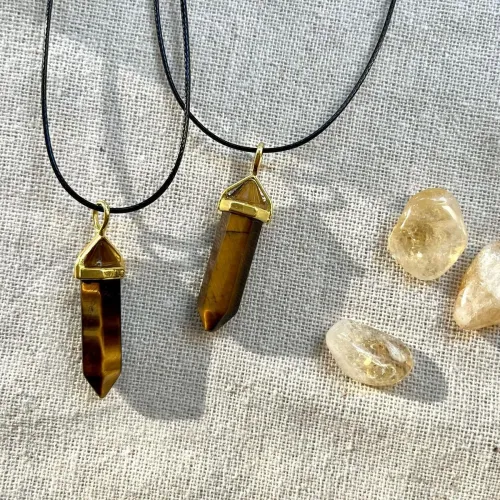
Consider browsing at a souvenir shop seeing "cobalt blue tiger eye" necklaces. Under pendant lights, every piece blazes uniformly—a subtle warning sign. This situation highlights why optical literacy matters. True chatoyancy emerges only when parallel fibrous structures refract light perpendicularly. Natural specimens display a dynamic bright band that slides along the surface as you rotate them under focused light, while synthetics scatter reflections randomly. UV light tests can further expose imitation pieces through atypical fluorescence patterns.
Simple inspection rituals reveal authenticity. First, hold thin slices against light sources: natural edges display slight reddish-brown transparency where mineral thickness dips below 2mm. Notice also how genuine surfaces reflect light—diffused gradients flow across genuine quartz while glass impersonators create sharp light breaks. Under 10x magnification, seek irregular hematite inclusions resembling clouds rather than uniform air bubbles indicating manufactured material.
A friend shows you her inherited "blue tiger eye" bracelet perplexed by its blue-gray bands mixed with amber streaks—is this normal? This scene frames why variation awareness prevents misdiagnosis. Natural specimens appear primarily in steel-blue spectrums with minimal golden undertones, not electric blues marketed as "sapphire quartz." Banding irregularities also prove legitimacy; perfectly uniform patterns may indicate heat-treated production. Authentic stones exhibit fibrous structures occasionally misaligned by geological pressures.
Pattern interpretation requires lighting awareness. Place potential specimens against white paper under daylight: untreated pieces maintain color stability while artificially enhanced versions reveal spotty oxidation. Note that in layered cabochons, lateral light transmission creates striped illumination rather than synthetics’ uniform diffusion. Don’t mistake mild surface banding—caused by crocidolite decomposition—for imperfections; these slight undulations actually confirm natural formation.
Remember trying a "blue tiger eye ring" at a craft fair? The vendor praised durability while you hesitated about scratches over time. Such everyday moments illuminate why practicality precedes aesthetics. At 6.5-7 on the Mohs scale, blue tiger eye withstands occasional impacts but works better in pendants than high-contact pieces. Verify stone treatment before purchase—heat-enhanced blues display unnatural vibrancy but fade faster under UV exposure. For strands, embrace minor sizing irregularities as natural stones vary.
Understanding composition informs preservation. Due to silica structures, avoid ultrasonic cleaners that may microfracture mineral layers. Storage also matters: maintain separation from harder stones like diamonds to prevent abrasion. When examining investment pieces from South Africa’s Northern Cape, verify origin documentation—region-specific mining characteristics impact value assessments.

Recap core observation principles for future exploration. When encountering potential blue tiger eye, prioritize axis-dependent brightness shifts over static colors. Practice simple temperature tests—genuine quartz maintains coolness against skin longer than composites. Remember density differences; request stones match volume if comparing pieces. These focused checks prevent overwhelming details when jewelry shopping.
Why does my blue tiger eye have golden streaks?
Minimal golden sections may occur where incomplete oxidation preserves original tiger eye coloration—natural variance not affecting authenticity.
What magnification level suits home verification?
10x loupes typically reveal characteristic hematite inclusion patterns distinguishing natural specimens.
Does all blue tiger eye change in different lighting?
Authentic pieces maintain stable base colors while chatoyant bands intensify or dim depending on light angles.
Where are reputable authentication sources located?
South African geological certification programs provide reliable documentation for sourced specimens.
Can synthetic versions achieve identical hardness?
Glass composites may match surface hardness but lack comparable fracture resistance and thermal properties.
Reference Materials for Technical Verification
Standard mineralogy reference publications Academic gemology identification handbooks National geological survey documentation Peer-reviewed crystallography journals Industry-standard Mohs scale application guides


$
